Kelp for Dogs and Cats: Dental Health and Everyday Nutrition
Here's a statistic that surprises most pet parents: around 80% of dogs, and a similar share of cats, show signs of dental disease by three years of age. Bad breath is usually the first clue, and while we tend to laugh off "dog breath" and "fish breath," it often signals plaque, tartar and bacteria building up along the gumline.
One natural ally in the daily fight comes straight from the sea.
Why Dental Health Deserves Your Attention
Dental disease doesn't stay in the mouth. Left unchecked, oral bacteria can cause painful gum inflammation, tooth loss, and added strain on the body. Professional cleanings under anaesthetic are effective but costly and stressful, which is why every vet's first advice is daily prevention.
Daily tooth-brushing is the gold standard for both dogs and cats. But let's be honest: most pets (and their humans) don't keep it up, and many cats simply won't allow it. That's where a daily kelp supplement earns its place as part of a dental routine.
How Kelp Fits Into Oral Care
Kelp is a broad family of brown seaweeds, and researchers have taken a keen interest in how certain kelps influence the mouth. The idea is that natural compounds in seaweed, polyphenols and related bioactives, are absorbed through digestion and reach the mouth via saliva, where they can influence the environment in which plaque-forming bacteria grow. In other words, kelp works from the inside, which is what makes a sprinkle-over-food powder so appealing for pets that hate a toothbrush.
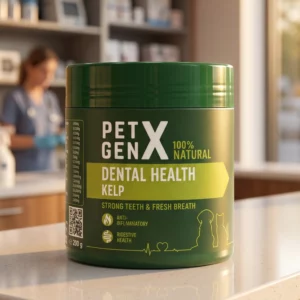
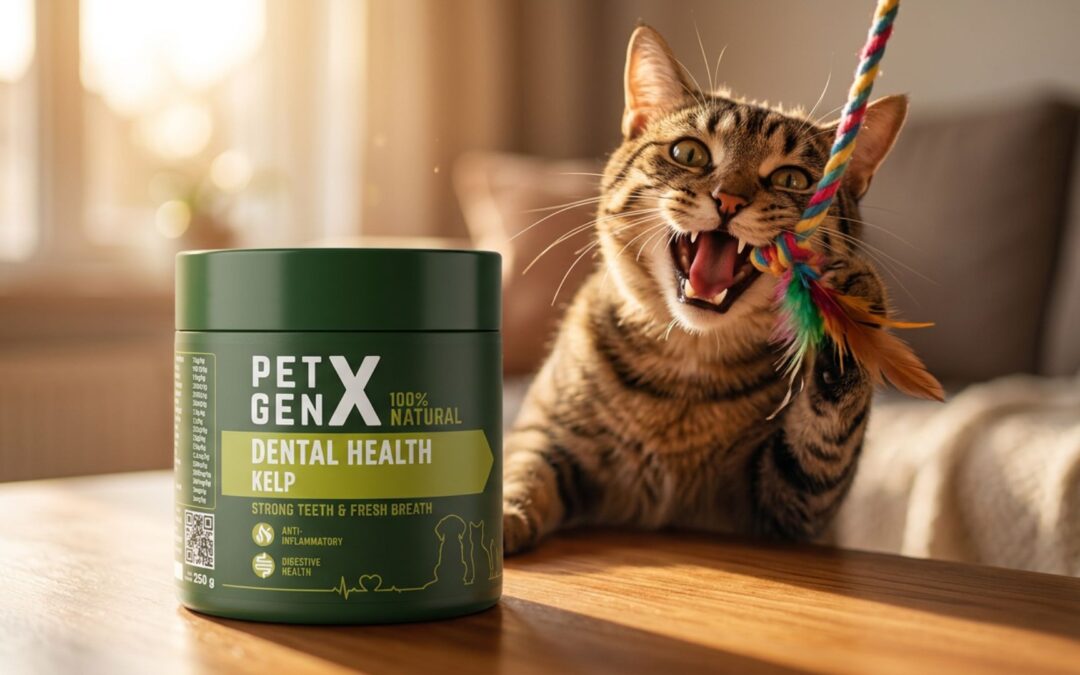
An honest word on the science: the strongest published dental trials in dogs and cats used a specific North Atlantic seaweed (Ascophyllum nodosum). PetGENX Dental Health Kelp is made from Ecklonia maxima, South Africa's own sustainably harvested sea kelp. It shares the mineral richness and polyphenol antioxidants of the wider kelp family, and dental health is how we position it, but we won't borrow another species' trial numbers to describe it. What we can say is that daily kelp supplementation is a sensible, natural addition to a proper dental routine, and many pet parents report fresher breath over several weeks of consistent use.
The Nutritional Bonus of Ecklonia Kelp
Dental support is the headline, but Ecklonia maxima brings genuine nutritional value on its own. It's a natural source of iodine, which supports healthy thyroid function and metabolism, along with calcium, potassium and magnesium. It's rich in polyphenol antioxidants that help counter oxidative stress and support the body's anti-inflammatory pathways, and its natural fibre aids digestion and feeds a healthy gut microbiome, acting as a prebiotic. Many pet parents also notice a glossier coat over time, a happy side effect of that mineral richness.
How to Feed Kelp — and One Important Caution
Mix PetGENX Dental Health Kelp into food, yoghurt, or mince daily:
| Pet | Daily Amount |
|---|---|
| Small breeds (under 3 kg) | ½ teaspoon |
| Small breeds & puppies (under 12 kg) | 1 teaspoon |
| Medium breeds & puppies (over 12 kg) | 2 teaspoons |
| Large & giant breeds (over 35 kg) | 3 teaspoons |
| Whelping bitches | 3–4 teaspoons |
| Cats | ¼ teaspoon |
Give it four to eight weeks of consistent use before judging the effect on breath.
The caution that matters: kelp is naturally rich in iodine, and cats in particular are sensitive to iodine intake. Stick to the recommended amounts, and speak to your vet first if your dog or cat has a known thyroid condition or takes thyroid medication. For best dental results, pair the powder with the rest of a routine — dental-friendly chews, and brushing if your pet tolerates it.
Natural, Local, Single-Ingredient
PetGENX Dental Health Kelp contains exactly one ingredient: pure Ecklonia maxima kelp powder, no additives, no fillers, packed to human-grade standards in a SAHPRA-certified South African facility.
Give your pet something to smile about. Shop Dental Health Kelp (250 g) →